
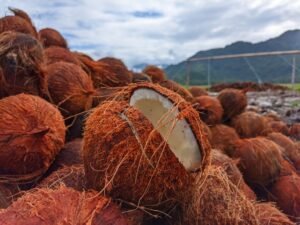
Exploring the Coconut Wholesale Market: Trends, Pricing and Global Demand


Understanding the Coconut Wholesale Landscape
The coconut wholesale industry has undergone significant changes in recent years, driven by global demand, trade efficiencies, and the growing appeal of natural and plant-based products. As coconuts become a key commodity across multiple sectors, from food and beverage to cosmetics and construction, the market is no longer limited to regional players.
Today, wholesalers and importers worldwide look to consistent suppliers, especially in Asia, to fulfill large-scale coconut requirements. India, the Philippines, and Indonesia dominate this trade by offering reliable volumes and competitive CIF pricing, making them central to the global coconut supply chain.
Today, wholesalers and importers worldwide look to consistent suppliers, especially in Asia, to fulfill large-scale coconut requirements. India, the Philippines, and Indonesia dominate this trade by offering reliable volumes and competitive CIF pricing, making them central to the global coconut supply chain.
Key Trends Influencing the Coconut Wholesale Market
The rise of coconut exports is tied to evolving industry trends that reflect changes in consumer behavior, technology, and global policy.
- Growth in Plant-Based Lifestyles: Coconut water, oil, and milk are in demand due to vegan and health-conscious diets.
- Semi-Husked Dominance: Semi-husked coconuts are preferred in the Middle East and Europe due to their durability and longer shelf life during transit.
- Push for Sustainable Sourcing: Wholesale buyers increasingly ask for coconuts grown with minimal environmental impact and certifications like Fair Trade or Organic.
- Increased Use Beyond Food: Coconut shells, husk fibers, and coir are now important for packaging and home goods, expanding the market.
- Tech-Enabled Supply Chains: Many exporters have adopted automated grading, digital tracking, and improved port logistics to reduce delays.
These trends push bulk coconut suppliers to modernize and adapt, ensuring they meet both volume and value expectations in a competitive export environment.
What’s Driving Changes in Wholesale Coconut Prices
One of the most important aspects of the coconut wholesale business is pricing, which has grown increasingly dynamic. Prices are affected by multiple factors, including seasonal harvests, climatic conditions, fuel costs, and export logistics. In countries like India, where exports peak during specific harvest cycles, prices can fluctuate based on internal demand and freight container availability. Moreover, the type of coconut being exported also plays a role; semi-husked coconuts typically command a higher price due to better preservation and longer shelf life, making them ideal for distant markets.
Exporters offering CIF (Cost, Insurance, Freight) rates also affect pricing decisions. While this may raise the upfront cost for buyers, it reduces risk by covering insurance and delivery. On the supply side, costs like packaging materials, compliance with certifications (such as APEDA and FSSAI), and handling fees also shape the final wholesale coconut prices. As the market matures, price transparency and long-term supplier relationships are proving vital for maintaining business margins and reducing spoilage-related losses.
Exporters offering CIF (Cost, Insurance, Freight) rates also affect pricing decisions. While this may raise the upfront cost for buyers, it reduces risk by covering insurance and delivery. On the supply side, costs like packaging materials, compliance with certifications (such as APEDA and FSSAI), and handling fees also shape the final wholesale coconut prices. As the market matures, price transparency and long-term supplier relationships are proving vital for maintaining business margins and reducing spoilage-related losses.
The Global Demand & Distribution Network
Understanding where demand is rising helps exporters and wholesalers prioritize markets and align supply chain strategies accordingly.
- Middle East: Countries like the UAE and Saudi Arabia import vast volumes of semi-husked coconuts for religious offerings, food service, and retail chains.
- Europe: There's growing demand for coconut-based organic and plant-based products, with importers valuing coconuts that meet EU phytosanitary regulations.
- North America: The wellness trend is fueling demand for coconut water, oil, and snack items made from dried or shredded coconut.
- Asia-Pacific: Countries such as China, Japan, and Australia are emerging buyers of coconut-related health and skincare products.
- Africa: While smaller in volume, there is steady demand from manufacturing units for coconut shell and coir-based materials.
This coconut distribution network is supported by well-established export hubs in South India, Indonesia, and the Philippines, offering direct access to global shipping routes.
Role of Indian Bulk Coconut Suppliers in Market Growth
India’s position as a global coconut supplier is not accidental. The country’s fertile southern states, Tamil Nadu, Kerala, and Karnataka, provide year-round harvests, strongly emphasizing both husked and semi-husked varieties. What makes India’s bulk coconut suppliers unique is their integrated approach. Many exporters manage farm partnerships, in-house grading, packaging, and end-to-end logistics, giving them better control over consistency and quality.
Additionally, Indian suppliers are known for their ability to adapt to custom orders. Whether it’s tailoring coconut size, moisture content, or husk finish, they meet the unique needs of clients in various countries. Their experience in handling export documentation and meeting food safety certifications gives international buyers confidence in sourcing. As demand grows, Indian coconut exporters are increasingly investing in automation, cold storage, and smart logistics to support year-round delivery, reduce spoilage, and maximize profitability for buyers.
Additionally, Indian suppliers are known for their ability to adapt to custom orders. Whether it’s tailoring coconut size, moisture content, or husk finish, they meet the unique needs of clients in various countries. Their experience in handling export documentation and meeting food safety certifications gives international buyers confidence in sourcing. As demand grows, Indian coconut exporters are increasingly investing in automation, cold storage, and smart logistics to support year-round delivery, reduce spoilage, and maximize profitability for buyers.
Forecasting Coconut Export Trends: What to Expect
The coconut industry is headed toward increased sophistication, and exporters will need to stay ahead of changing demands. From digital trade channels to origin-specific branding, the next wave of coconut market trends will focus on specialization, speed, and sustainability.
- Digital Marketplaces: Exporters are adopting online trade portals and B2B platforms to showcase offerings and close deals faster.
- Smart Traceability: QR-coded labels and digital quality checks are helping buyers track coconuts from farm to shipment.
- Brand Differentiation: Origin-based labeling like "Pollachi coconuts" is gaining ground, especially in retail markets.
- Processed Coconut Products: India is seeing a spike in exports of dried coconut, virgin oil, and eco-friendly coir-based items.
- Supportive Government Policies: Schemes promoting exports and better farm practices will likely help Indian exporters compete more aggressively on the global stage.
These trends will enhance the value chain and further professionalize the role of coconut exporters in the global market.
Coconut Wholesale Market Is Poised for Long-Term Growth
The coconut wholesale market is no longer niche. It’s a global trade opportunity driven by health trends, sustainability, and evolving industry use cases. As demand spreads across continents, pricing remains influenced by quality, logistics, and product type. Countries like India continue to play a central role, thanks to strong production zones, skilled exporters, and advanced trade networks.
For buyers and B2B wholesalers, understanding global coconut demand, aligning with reliable bulk coconut suppliers, and staying alert to export trends will be key to success. With better infrastructure and smarter sourcing methods, the coconut wholesale industry is entering a new phase, one that rewards quality, consistency, and long-term trade relationships.
For buyers and B2B wholesalers, understanding global coconut demand, aligning with reliable bulk coconut suppliers, and staying alert to export trends will be key to success. With better infrastructure and smarter sourcing methods, the coconut wholesale industry is entering a new phase, one that rewards quality, consistency, and long-term trade relationships.


Lorem ipsum dolor sit amet consectetur.
Lorem ipsum dolor sit amet consectetur. Consequat vulputate convallis eget mollis viverra nunc mi egestas. Risus facilisi nullam donec.